ServicesEV Charger Installation
EV Charger Installation in Hudson Oaks
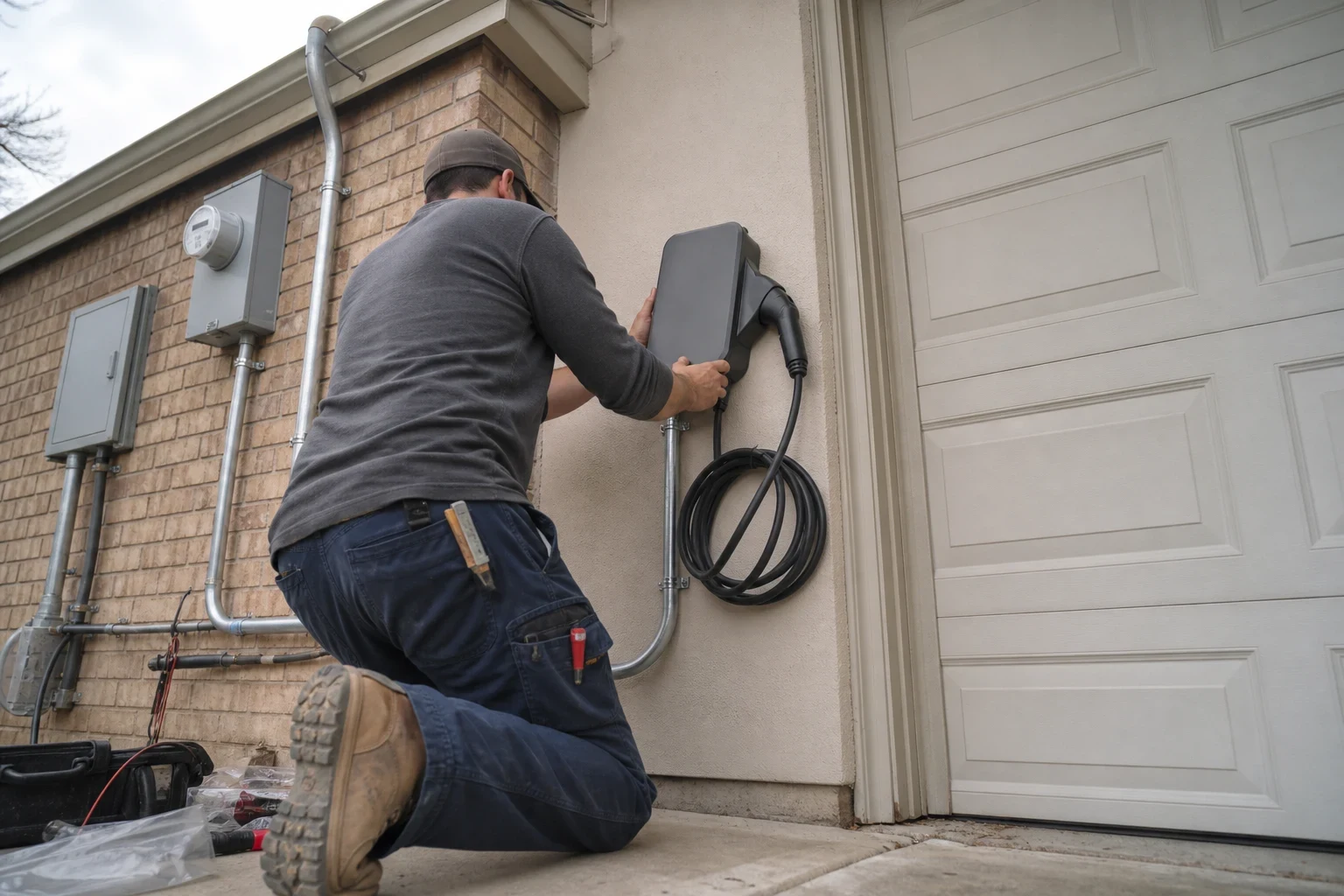
Wake up to a full battery without stretching an extension cord across the garage. We check whether your panel can carry the load, run a dedicated circuit to where you park, and leave you with a Level 2 charger that is safe, inspected and ready to use.
Home Charging Done Right and Done Faster
Most EVs ship with a cord made for an ordinary 120-volt outlet. It does the job, but refilling a battery that way can take a day or longer. A Level 2 charger uses 240 volts and can usually fill you up overnight. To get that speed, it needs a circuit of its own, wire of the right size and a breaker that matches the charger.
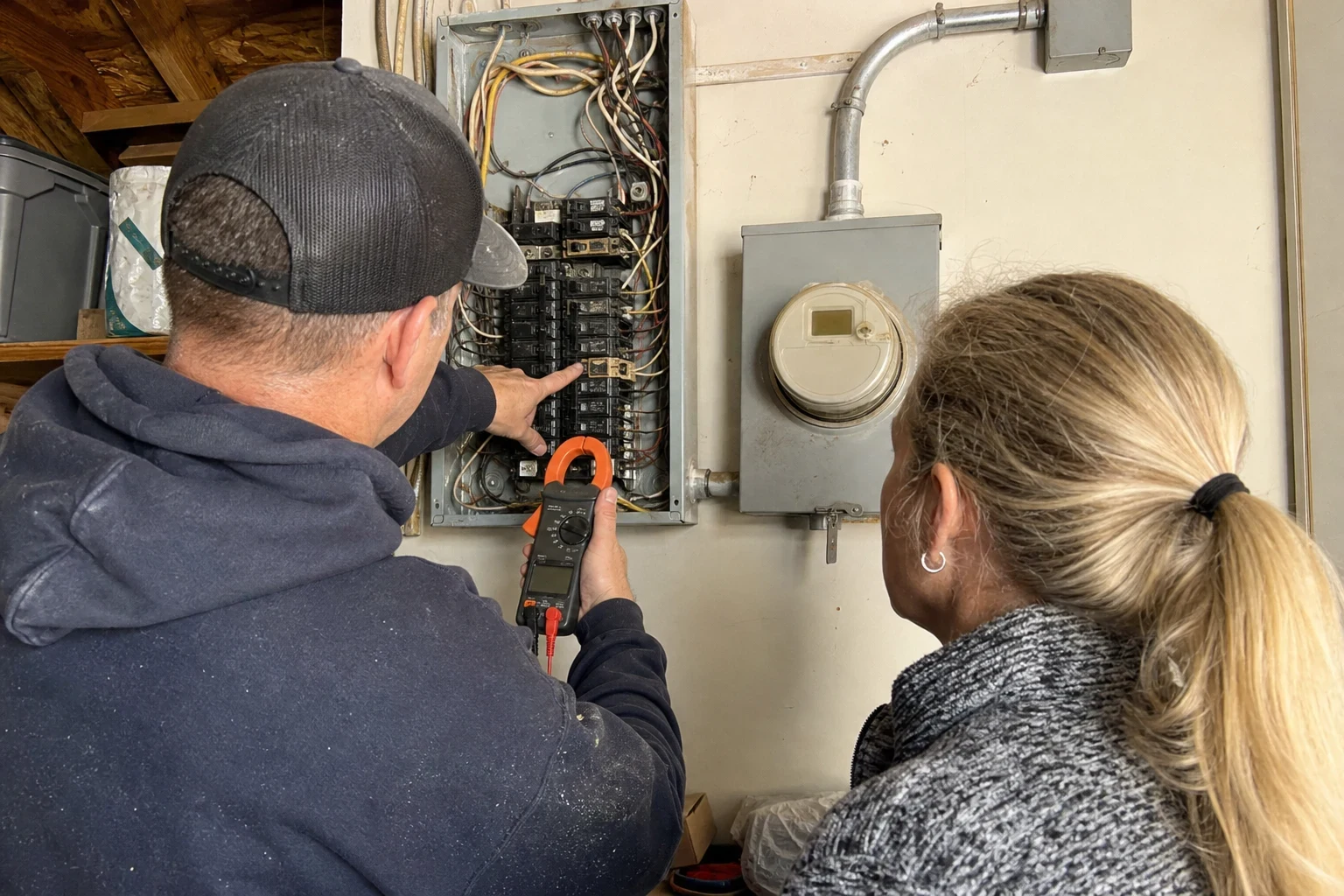
As a licensed electrical contractor, TECL 36609, we handle a charger the same way we handle any big appliance in your home. Before we mount anything, we check your panel, your other heavy loads such as the AC and dryer, and the route from the panel to where you park. If the panel lacks space or capacity, we say so plainly and go over your choices, panel upgrades included.
What Comes With Your EV Charger Install
Checking the load
We total up what your home already uses and make sure your service can support a charger running for hours. This step is what keeps breakers from tripping on a hot summer night.
A breaker and circuit just for charging
We run a new circuit directly from your panel to the charger, with the wire and breaker sized for the unit's amperage. No other outlet or appliance is on it.
Wall charger or 240-volt outlet
We can hardwire a wall-mounted charger or put in a heavy-duty outlet for a plug-in unit, with the GFCI protection today's code requires. We'll install a charger you already own or help you choose one that suits your car and your panel.
Mounting rated for outdoors
If you park in the driveway or under a carport, that works too. We use weather-rated conduit, fittings and boxes and place the unit out of the way of sprinklers and rain runoff.
Permit, inspection and a run-through
We get the permit the local jurisdiction requires and set up the inspection. Afterward we test the charger together and show you which breaker feeds it.
When a Home Charger Makes Sense
- You have an EV arriving soon
- Having the circuit ready before the car shows up lets you charge the right way starting night one.
- The cord that came with the car is too slow
- When most mornings start with less range than you need, the 120-volt outlet is what's holding you back.
- An extension cord is doing the charging
- Extension cords aren't made to carry a charging load for hours on end. They get hot, and that creates a fire risk we'd like you to stop running.
- The breaker trips during charging
- A breaker that trips or an outlet that turns warm or discolored points to a worn or overloaded circuit. Unplug the car and get it checked before you charge there again.
- A storm knocked out the charger
- Lightning and power surges can harm a charger's electronics or the circuit that feeds it. We test the unit, breaker and wiring to see what failed and whether surge protection is a good idea for your home.
From First Call to First Charge
- 1
Set up a service visit
Let us know what you drive, where you park and whether you already own a charger. We pick a time to come by.
- 2
Check the panel and measure the path
We open your panel, work out the load and measure the distance to where you park. You see our findings before making any decision.
- 3
Estimate in writing, then the permit
Your written estimate lists the circuit, the materials and the permit. When you approve it, we file the permit and work with your utility if the job requires it.
- 4
The day we install
Most installs take part of a day. We run the circuit and mount the unit, keep your garage neat, and pick up wire scraps and drywall dust before heading out.
- 5
Inspection and getting you started
Once the inspector approves the work, we plug in your car with you, set up any app or charging schedule and answer whatever you want to know.
What Changes the Price of a Charger Install
Every garage is wired differently, so we set a price only after we've seen yours. The largest differences come from how far the wire has to run and how much your panel can take. Each part is listed on your written estimate, so there are no surprises later.
- How far the charger is from the panel
- The easiest job is a panel on the garage wall beside where you park. When the panel is on the opposite side of the house, the job takes more wire, conduit and labor.
- What your panel can carry
- A panel with open slots and spare capacity keeps the job simple. If it's full or too small, you may need a load management device or a panel upgrade first.
- Charger type and amperage
- A charger with a higher amp rating needs a bigger breaker and heavier wire. Plug-in outlets and hardwired units also take different parts and labor.
- Inside or outside
- Outdoor installs call for weather-rated materials, and a carport set apart from the house may need a longer conduit run or trenching.
- Permit and inspection fees
- Your local jurisdiction sets the permit fees and inspection steps, and both are part of your estimate.
Common Questions About EV Chargers
- Will a charger work in my garage?
- In most homes it will. The garage is the usual choice since the panel tends to be close by. We first make sure your panel has the capacity, then place the charger where the cord reaches your car's port with room to spare.
- Is the permit something you take care of?
- Yes. Adding a 240-volt circuit usually requires a permit, so we file it the way your local jurisdiction requires and meet the inspector. That puts the work on record and gets it a second review.
- Does a charger mean replacing my panel?
- Not in every case. Plenty of homes have space for a charger circuit. If yours doesn't, we walk you through the load numbers and your choices, like a lower-amp charger, a load management device or a panel upgrade.
- How does the charger handle storms and outages?
- A typical charger shuts off when power drops and picks back up once it's restored. The surge when power returns can harm electronics, so surge protection is worth a conversation. If you have a generator or home battery backup, we can explain how the charger works alongside it.
- Who handles the installation?
- We hold Texas electrical contractor license TECL 36609 and have been in business for 5 years. Our service area covers Hudson Oaks and nearby towns such as Willow Park, Weatherford and Aledo.
Ready to Charge at Home?
Tell us what you drive and where you park. We will check your panel, give you a written estimate and get your charger installed and inspected.