ServicesTorque & Cleans
Torque & Clean Service in Hudson Oaks
Loose connections inside an electrical panel make heat long before they make trouble you can see. We shut your panel down, tighten each terminal to its listed torque value and clean out the grime, then walk you through what we found.
Why Your Panel Benefits From a Torque and Clean
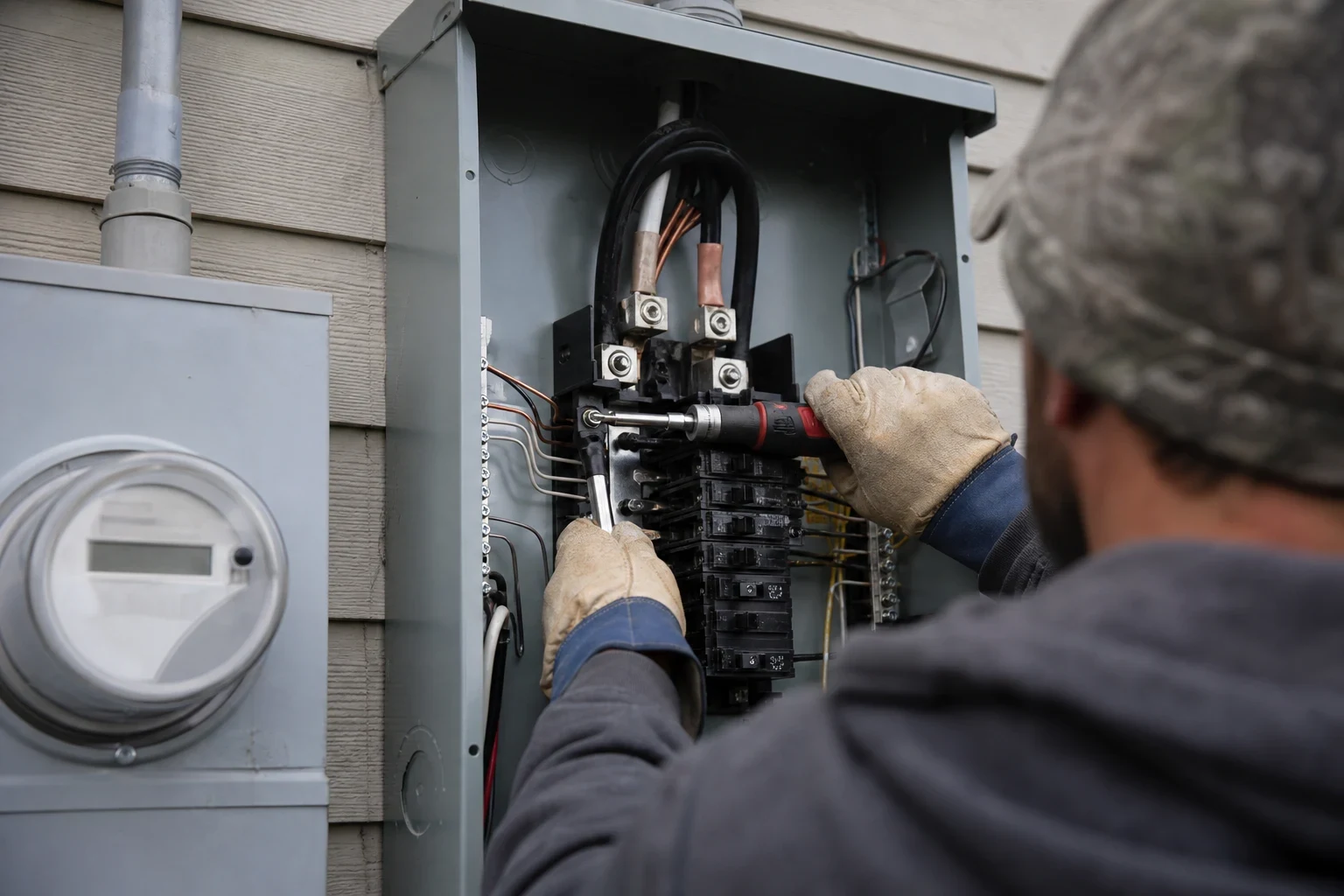
Each screw terminal in a panel clamps a wire in place. Through the day, changing loads make the metal warm and cool, and over years that can slowly loosen the grip. A loose connection resists current, and resistance becomes heat. On a torque and clean visit we shut the power off, bring the main lugs, breaker terminals and neutral and ground bars to the maker's torque values, and remove the dust, insect debris and grime that build up in the enclosure.
It also makes sense after a rough storm. Wind-blown rain can get into an outdoor panel or meter base, and lightning striking nearby can strain connections that look fine from outside. We open everything up, inspect it carefully and tell you straight what is sound and what isn't. If anything needs more than maintenance, you hear why before any further work.
We hold Texas electrical contractor license TECL 36609 and have 5 years in business. Few hours spent on your home's electrical system do more good than this one.
What We Check, Tighten and Clean
- 01
Main lugs and breaker terminals
We use a calibrated torque screwdriver and wrench, not guesswork, to bring each connection to the value printed on the panel label or breaker. Overtightening can damage a conductor just as surely as a loose screw can, so we work to spec.
- 02
Neutral and ground bars
These bars carry return current and fault current. We confirm each wire is seated, tightened and not doubled up where the panel does not allow it.
- 03
Dust and debris removal
Dry brushing and vacuuming only, never sprays or liquids. Dust holds moisture and heat, and wasp nests and other insect debris turn up more often than you would think.
- 04
Heat and corrosion inspection
We look for darkened insulation, melted plastic, pitted bus bars and green or white corrosion on aluminum and copper. Each of these points to a connection that has been running hot or getting wet.
- 05
Outdoor panel and meter base check
On exterior equipment we check the cover seal, unused knockouts and rust around the bottom of the enclosure, since that is where storm water tends to get in.
- 06
Photos and notes for you
You get pictures of anything worth your attention and a plain explanation of it. If you are dealing with your insurer after a storm, those photos give you a clear record of what we saw.
Questions about Torque & Cleans?
Call(682) 509-0416When It's Time for a Torque and Clean
Panel cover or breaker running warm
A breaker carrying load may feel a little warm, but a cover that is hot to your hand means the panel should be opened and checked.
Dimming when large appliances kick on
A quick flicker is normal. A clear dip each time the AC or dryer starts can point to a loose connection in the panel.
Crackling, buzzing or an odd smell
A sizzle or burning odor near the panel can mean arcing. Shut off what you can do safely and have it checked soon.
Rain or lightning reached the panel
If water blew into an outdoor panel or lightning hit near your house, the breakers and connections should be looked at even when everything still works.
Nobody recalls it being serviced
You just moved in, or the panel has never had service. Years of heating and cooling take a toll whether you see it or not.
What Happens on Your Visit
- 1
We talk before we come
On the call, we ask where your panel is, what you have noticed and whether anything must stay powered, like a medical device or a packed freezer, so we can plan the outage around it.
- 2
Power off and confirmed dead
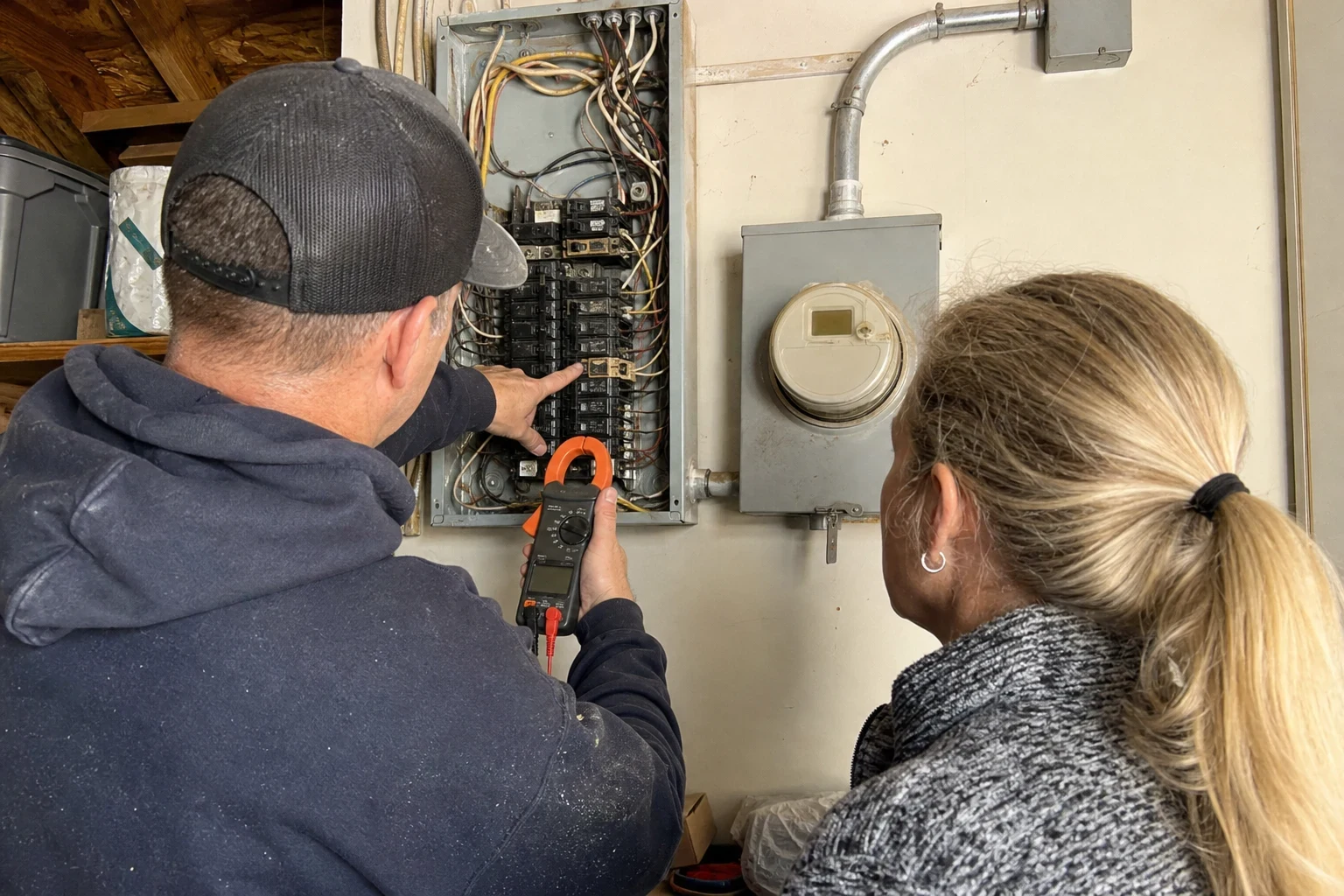
We switch off the main and use a meter to prove the panel is de-energized before touching any terminal. Most homes are dark only briefly, and we give you a rough time first.
- 3
Cleaning, tightening and inspection
We clear out debris first for a good view, then bring every lug, breaker and bar to torque spec, photographing anything that looks overheated, corroded or damaged.
- 4
Power restored and results shared
We bring power back in stages, confirm the circuits return normally and go through our photos with you. If a breaker or bus bar should be replaced, we explain choices and cost, and nothing else happens without your OK.
What Affects the Cost
A torque and clean is a fairly predictable job, but no two panels are quite alike. We price it once we know what equipment you have and where it sits. Any repair we find is priced separately and explained before you decide.
- Number of panels
- A main panel plus a garage or shop subpanel takes longer than a single panel. Meter bases and disconnects add a little time too.
- Panel size and breaker count
- More breakers and more wires on the neutral bar mean more connections to tighten and check.
- Condition inside
- Heavy dust, insect nests or corrosion slow the cleaning and may call for closer inspection of the parts underneath.
- Access
- A panel behind shelving, in a tight closet or on an exterior wall in the summer sun can add setup time.
Common Torque and Clean Questions
How long is the power off?
With one typical panel, the outage covers a modest share of the visit, not the whole day. You'll get a time estimate before we shut off the main. Expect to reset some clocks, and keep the fridge and freezer doors shut until power is back.
Is a torque and clean a panel upgrade?
No. This visit keeps the panel you already have working well. If yours turns out to be too small, damaged or a model with known problems, we'll let you know, and our Panel Upgrades page covers that separate job.
The storm passed and everything works. Is a visit still worth it?
Not in every case, but it is worth thinking about if water got into the panel or lightning hit close by. Moisture and surge damage can hide inside a panel for weeks before a breaker quits or a connection heats up. A visit settles the question.
How often should this be done?
No one schedule suits every home. Plenty of owners book one every few years, after a big storm or when they buy a house with an older panel. Once we see your panel's condition, we can suggest a reasonable interval.
What if you find a breaker that is damaged?
We show you the photo, explain the safety concern and describe what a replacement takes. A small fix such as one breaker can often be done on the same visit with your OK. Bigger problems fall under our Electrical Repair work and are quoted before we begin.
Does someone need to be home?
Yes, at least at the beginning and the end. We need to reach the panel and go over what we find before the power goes off and once it is back on.
Have Your Panel Looked After Before It Asks for Attention
A short shutdown and careful tightening can catch the slow problems that storms and Texas heat leave behind. Phone us and we will set a time that works for your home.