ServicesGenerator Installation
Generator Installation in Hudson Oaks
When the power goes out during a storm, a well-installed generator keeps your fridge, well pump, heat or AC and medical equipment running. We size the unit to your home, wire it with a code-compliant transfer switch, and handle the permit and inspection so the setup is safe for you and the line crews.
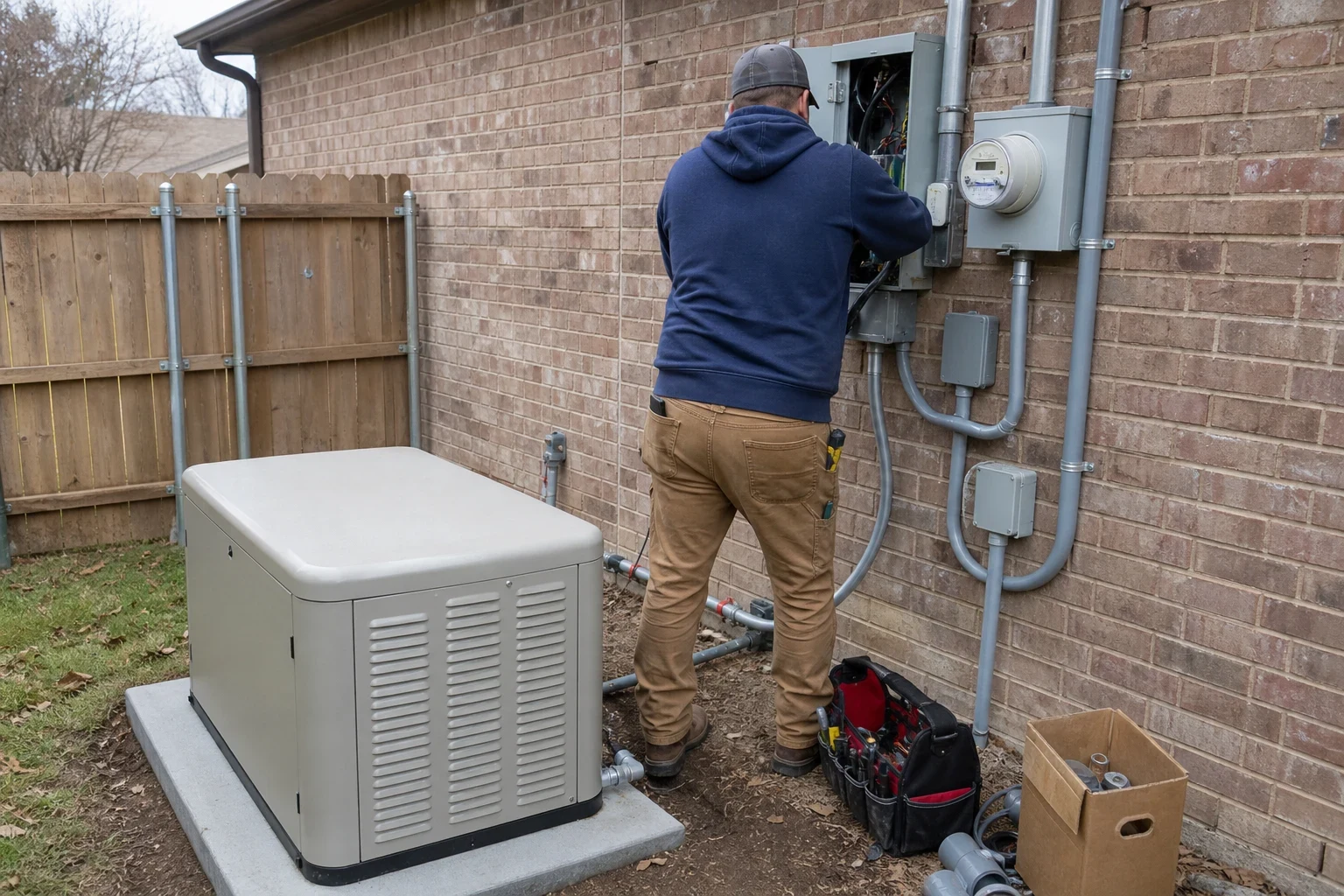
Backup power that's connected the right way
A generator is only as good as its connection to your home. We install standby generators that start on their own when grid power drops. We also set up portable generator hookups with an inlet and interlock, so you can plug in safely instead of running extension cords through a window.
The part that matters most is the transfer switch. It keeps generator power from feeding back into the utility lines, which protects the crews working to restore service and protects your generator when the grid comes back. We're a licensed electrical contractor, TECL 36609, and we pull the permit and build every connection to pass inspection.
Spring hail and wind, summer heat and the occasional winter ice storm all knock out power across Parker County. Planning the install ahead of the next outage lets you choose the size and fuel calmly instead of in a rush.
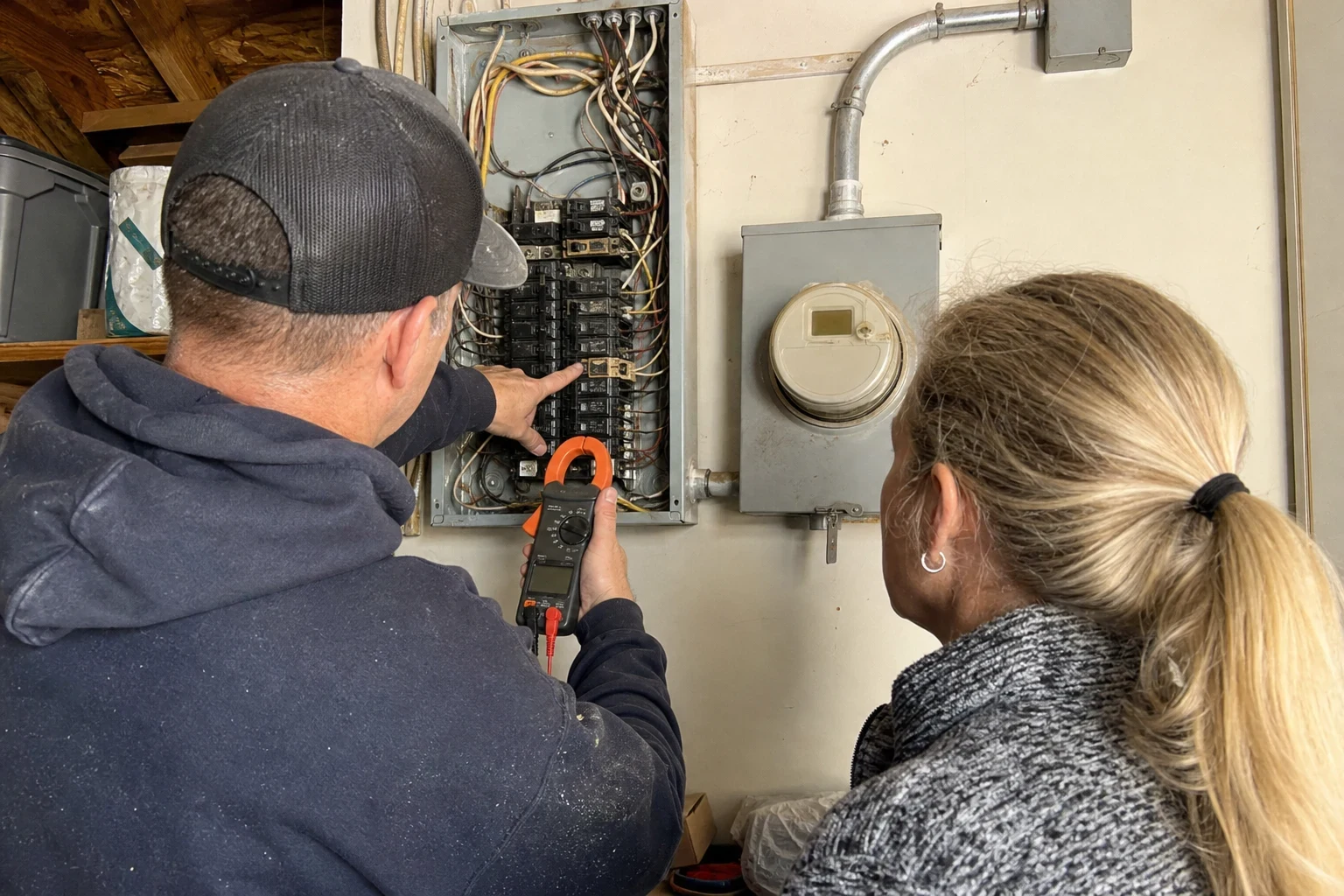
What comes with your generator install
- 01
Sizing from a load calculation
We note what you want powered in an outage, like the fridge, furnace blower, well pump, garage door or a window unit, and work out the load. That shows whether a unit for essential circuits will do or whole-home coverage is worth it.
- 02
Transfer switch
Standby units get an automatic transfer switch; portable generators get a manual switch or a panel interlock. Each is fitted to your panel and labeled so you can see which circuits it covers.
- 03
Location and required spacing
We help choose a spot that keeps the maker's required distance from windows, doors, vents and the house wall, so exhaust can't drift inside.
- 04
Wire, conduit and inlet box
We run outdoor-rated conduit and wire between the generator, transfer switch and panel, sealed where it passes into the house. Portable setups get a weatherproof inlet box close to where the generator will sit.
- 05
Working with the fuel installer
The gas hookup is made by a plumber or your propane supplier. We line up schedules with them so the unit can start as soon as both parts are finished.
- 06
Permit, inspection and first start
We file the electrical permit and book the inspection your local jurisdiction requires. Then we run the generator under load and show you how to start it, shut it down and handle the weekly exercise cycle.
Questions about Generator Installation?
Call(682) 509-0416When a generator starts to make sense
Power stays off for hours
When a storm leaves you in the dark overnight, lost groceries and an uncomfortable house pile up quickly. A generator carries you until the utility restores service.
Your water comes from a well
Without power, a well pump can't deliver water. Keeping just that circuit running makes an outage far easier.
A household member needs medical equipment
CPAP machines, oxygen concentrators and powered beds call for reliable backup. Those circuits go to the top of our list.
Cords are running from a portable generator
Cords through a propped-open door risk fire and carbon monoxide, and plugging a generator into a wall outlet can send power back onto the lines. A proper inlet and interlock fixes both.
Your job is at home
With your home office, internet gear and phone chargers powered, a blackout won't cost you a day of work.
What happens from visit to startup
- 1
A visit to look at your home
We look over your panel, meter, possible generator spots and fuel source. You receive a written estimate listing the generator size, the type of transfer switch and the wiring, item by item.
- 2
Permit and install date
After you approve, we file the permit and pick the install date, plus the fuel hookup if needed. Standby units can take time to arrive, and we'll tell you up front how long to expect.
- 3
The day of the install
We place the unit, run conduit, mount the transfer switch and connect to the panel. Your power will be off for part of the day during the panel work, and we'll give you the timing so you can plan.
- 4
Inspection and handoff
Once the inspector approves, we stage an outage, make sure the switch moves over and back smoothly and show you how to check the unit. The work area is cleaned up before we go.
What affects the cost
Generator installs vary more than most electrical jobs, because the unit, the switch and the site all change from home to home. We price each piece separately in your written estimate so you can see what drives the total and adjust if you want to.
- Generator type and size
- A portable hookup with an interlock costs far less than a standby unit. Among standby units, more capacity costs more, and whole-home coverage costs more than essentials only.
- Transfer switch and panel condition
- An automatic switch costs more than a manual one. If your panel is full, outdated or damaged, it may need work first, which falls under our panel upgrades.
- Distance and route
- The farther the generator sits from your panel, the more conduit and wire the job needs. Trenching or routing along a finished wall adds labor.
- Fuel connection
- The natural gas or propane hookup, including any tank, is priced by the plumber or supplier, separate from our electrical work.
- Permit and pad
- Permit and inspection fees apply, plus a mounting pad if the unit needs one.
Questions people ask about generator installs
Do I need a transfer switch for a portable generator?
Yes, if you want it to power your home's circuits rather than just appliances plugged straight into it. A transfer switch or panel interlock stops generator power from flowing out to the utility lines. Backfeeding through a dryer outlet puts line workers at risk and can damage your generator when grid power comes back.
How do I know what size generator to get?
It comes down to what you want running. Essentials such as the fridge, a few lights, the furnace fan and a well pump use far less than central air or an electric range. At the visit we do a load calculation and give you more than one size to consider.
Do you take care of the permit?
Yes. We file the electrical permit and handle the inspection your local jurisdiction calls for. The inspection gives the work a second review, and having that on record helps if you later sell the home or file an insurance claim.
Will you hook up the gas line too?
Our part is the electrical work. A plumber or your propane supplier makes the fuel connection, and we coordinate with them so the unit can be tested after both jobs are finished.
Who takes care of the generator after it's installed?
A standby generator needs regular exercise runs, oil changes and battery checks, all of which our generator service and repair visits cover. We've been in business 5 years and are glad to keep looking after the units we install.
Should I get a battery instead of a generator?
A battery runs quietly and burns no fuel, but big loads use it up in fewer hours. A generator runs for as long as its fuel lasts. We install home battery backup systems as well, so we can weigh both with you and help you pick.
Get ready before the next outage
Book a service visit and we'll look at your panel, your yard and what you need running, then give you a written estimate. We work in Hudson Oaks, Weatherford, Willow Park, Aledo and nearby towns.