ServicesGenerator Service & Repair
Generator Service & Repair in Hudson Oaks
A generator that sat quiet all year can fail the moment you need it. We test the battery, the transfer switch and the engine under real load, fix what's worn, and tell you plainly what your backup can and can't carry.
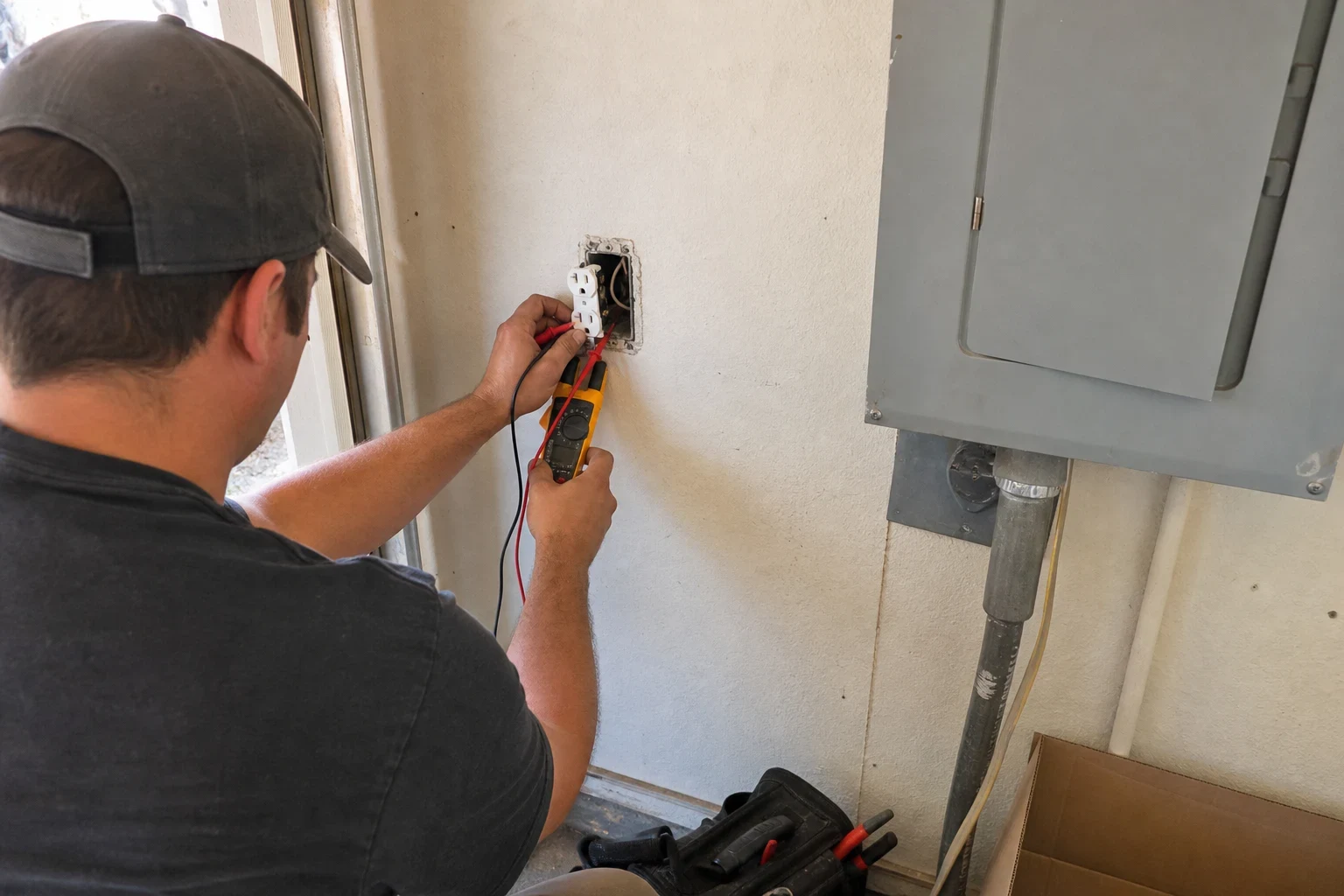
Backup power you can count on
Most generator trouble shows up during an outage, which is the worst time to find it. A weak battery, a stuck transfer switch or old oil can keep a standby unit from starting, or let it start and then shut down an hour later. Regular service catches those problems while the lights are still on.
We work on home standby generators and on portable units connected through a transfer switch or interlock. Our job is the whole chain: the generator itself, the switch that moves your home over to backup power, and the wiring between them. If something needs repair, we explain why before we touch it.
Spring storm season is when most of our neighbors around Hudson Oaks call. Getting a visit on the calendar before then means you're not waiting in line after the first big line of thunderstorms rolls through.
What we check on a service visit
Battery and charger
A weak or dead battery is the top reason standby units fail to start. We test it under load, clean the terminals and make sure the onboard charger keeps it charged.
Engine upkeep
Fresh oil and filter, a look at the plugs and air filter, and a check for leaks and worn belts. Units sitting outdoors all year take a beating from heat and dust.
Transfer switch test
We fake a utility outage and watch the switch hand your home to the generator and back. Pitted contacts or a sluggish transfer get fixed or noted for you.
Running it under load
A unit that starts may still falter once it works. We load it up to see that voltage and frequency stay steady for the circuits you count on.
Controller and weekly exercise
We pull the error history, clear stale faults and confirm the weekly exercise run is scheduled and really happening.
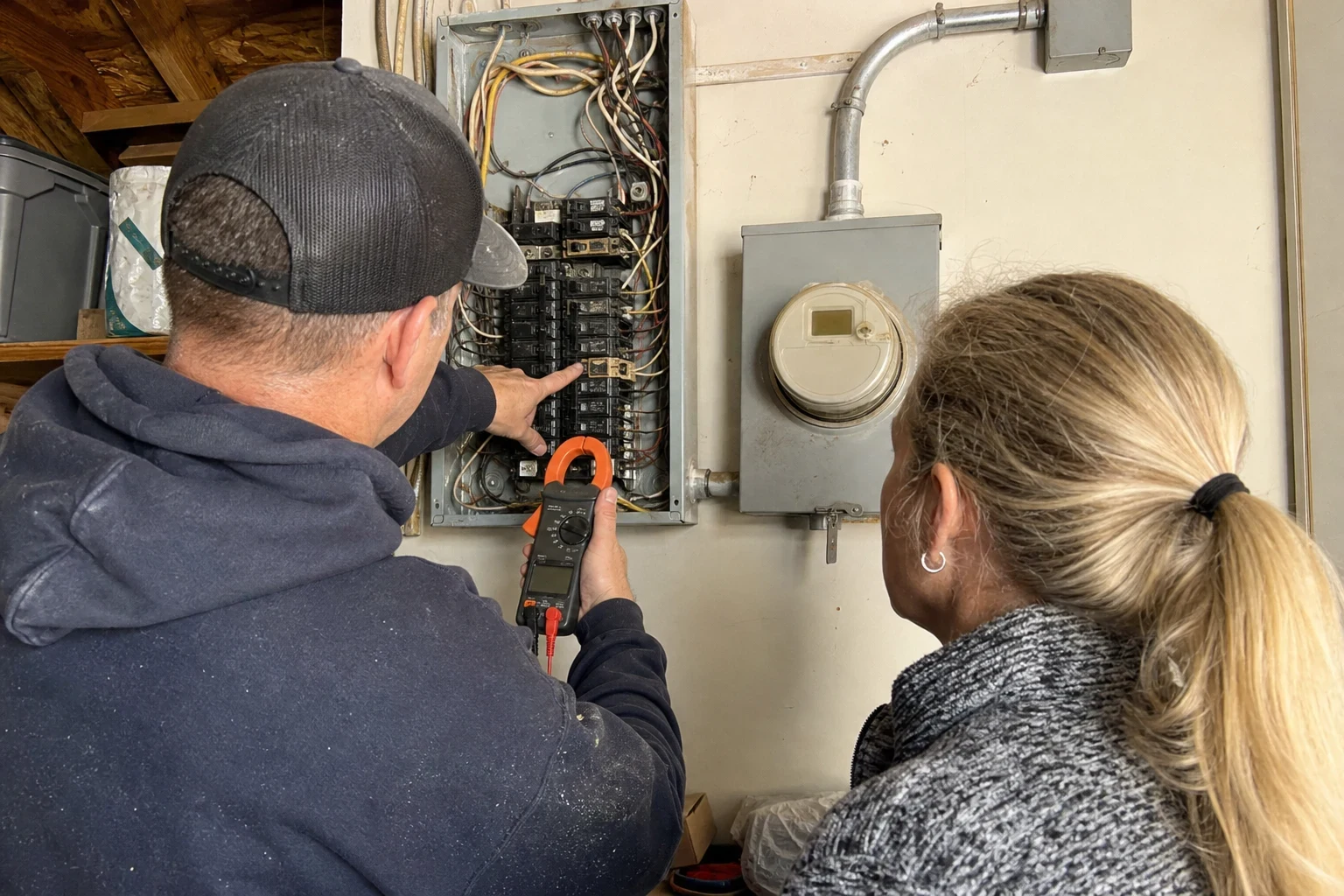
When your generator is due for a look
- It failed to start in the last outage
- Even if power returned fast, a no-start means some link in the system is broken. That kind of problem seldom clears up on its own.
- A warning light or fault code
- A red or yellow light on the controller means the unit has flagged something. Note the code if you can and share it when you call.
- No more weekly test run
- If the short weekly run has gone quiet, the battery, the controller or its settings may have quit.
- Flicker or struggling appliances on backup
- Lights that dim or surge, or a breaker that trips while on generator power, suggest unsteady output, too much load or a transfer switch fault.
- Over a year since its last service
- Oil ages and batteries fade even when the unit sits idle. A yearly visit stops minor wear from becoming a no-start.
What a service visit looks like
- 1
You call and describe the problem
We ask for the generator's make, model and age, how it ties into the house and what has gone wrong lately, so we arrive with the right parts and filters.
- 2
We inspect and run tests
We work at the unit outdoors and at the transfer switch. Your power may go off briefly while we test the transfer, and we warn you first.
- 3
We go over the results
You hear in plain terms what passed, what is wearing and what should be fixed now or can wait. Anything past routine upkeep waits for your OK.
- 4
Repairs and a last test run
When the work is finished, we load the generator once more and leave it in automatic mode for the next outage.
What changes the price
Routine upkeep costs about the same from visit to visit. Repairs depend on the problem, so we explain the cause and your choices before we price any repair.
- Type and size of unit
- A bigger standby generator takes more oil and more parts than a small unit or a portable.
- Which parts it needs
- Batteries, filters and plugs are routine wear parts and keep the visit simple. A failed control board, starter motor or worn transfer switch part makes it a larger repair, and that part may need to be ordered before we can finish.
- Condition and reach
- A unit skipped for years of service, or one boxed in by fencing or shrubs, takes more time to work on.
- Work on the transfer switch
- Fixing or swapping a transfer switch means extra labor at your panel indoors, and a permit and inspection may be needed.
What people ask about generator service
- How often does a generator need servicing?
- For most home standby units, plan on a yearly visit, and sooner if it carried your house through a long outage. Spring works well because it comes before storm season. A portable unit deserves a check before you rely on it, too.
- Will you service a generator another company installed?
- Yes. We work on most common standby and portable brands, whoever set them up. If we spot install problems, such as wire that is too small or no interlock, we show you and explain what a fix would involve.
- Who works on the generator?
- Hudson Oaks Electrician holds Texas electrical contractor license TECL 36609 and has been in business 5 years. Because a generator connects to your panel and transfer switch, the work belongs with an electrical contractor, not a handyman or a small-engine shop.
- My generator runs but can't handle the air conditioner. Is that fixable?
- It can be. Something may need repair, or the unit may just be too small for the load. Testing tells us which. If it is undersized, load management or a new setup through our generator installation service may be the better route.
- Can you fix gas supply problems?
- We check whether fuel is reaching the unit and tell you if the trouble is on the supply side. Gas line work is not electrical work, so we'll say plainly when a gas professional is the one to call.
Get your backup ready before the next storm
A short visit now beats finding a dead battery in the dark. Tell us about your generator and we'll set up a time that works for you.